Titanium Cookware Myths Debunked (2025)
Marketing loves the word “titanium.” Most pans on the shelf aren’t solid titanium—let’s separate real materials from label magic so you can buy smart.
Jump to our 2025 picks
TL;DR
- Most “titanium” skillets are aluminum with a titanium‑reinforced nonstick. Treat like quality nonstick.
- Pure titanium cookware is mostly for backpacking—ultralight, best for boiling, not indoor searing.
- Induction depends on a magnetic base layer; check specs or do a magnet test.
Quick answer: Is titanium cookware safe?
Food‑contact titanium is inert. For titanium‑reinforced nonstick, use medium heat, add a little fat, and ventilate; follow the brand’s max‑temp guidance.
This matters because the safety conversation shapes how buyers cook day to day and prevents warranty-breaking overheating.
Myth #1: “100% titanium” nonstick skillets
Solid titanium frying pans for home ranges are rare. Most products labeled “titanium” are aluminum pans with a titanium‑reinforced nonstick top‑coat that improves scratch resistance and lifespan. It’s still nonstick—avoid abrasive pads and scorching heat. This matters because buyers often equate the word “titanium” with solid metal, but care and expectations should match reinforced nonstick.
Myth #2: Titanium pans last forever
Even reinforced coatings wear with time. Longevity correlates with care: gentle utensils, medium heat, hand‑washing, and proper storage. Expect multi‑year life with good habits, shorter with metal tools and max burners. This matters because realistic lifespan planning prevents disappointment and reduces waste.
Myth #3: Titanium equals induction‑ready
Induction works via magnetism. If your pan’s base isn’t magnetic steel (or clad accordingly), it won’t heat on induction. Do the magnet test on the bottom or check the specs. This matters because induction compatibility determines whether your cooktop will heat the pan at all.
Myth #4: Pure titanium cooks more evenly
Pure titanium is light and strong, but it doesn’t spread heat as evenly as thick aluminum. That’s why backpacking pots excel at boiling water weight‑efficiently, while home skillets favor aluminum cores for even browning. This matters because performance claims should match physics: mass and conductivity drive even browning, not marketing terms.
Care that keeps coatings slick
- Preheat gently; add oil after the pan is warm.
- Use silicone or wood tools; avoid serrated edges.
- Let cool, then hand‑wash with mild soap and a soft sponge.
- Avoid aerosol sprays; they build residue.
- Nest with protectors or hang to prevent rim scuffs.
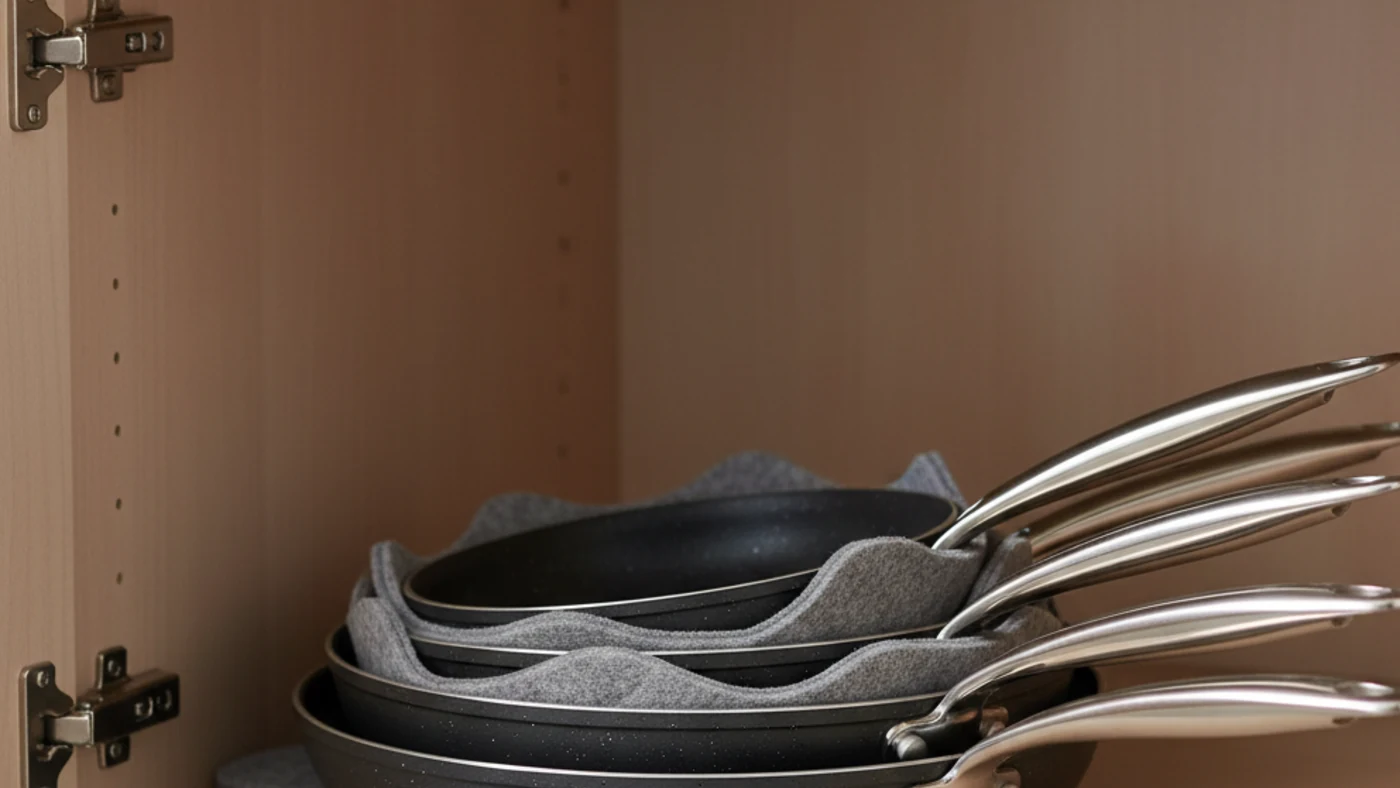
This matters because consistent low-abrasion care keeps coatings slick longer, saves replacement costs, and prevents pans from entering landfills early.
People also ask
- Is titanium cookware safe? Yes—food-contact titanium is inert. For titanium‑reinforced nonstick, follow the brand’s max temp and ventilate.
- What is titanium cookware made of? Usually aluminum with a titanium‑reinforced nonstick topcoat; pure titanium is common in backpacking pots.
- Is titanium better than ceramic? Different trade-offs: ceramic can handle a bit more heat; titanium‑reinforced PTFE often lasts longer with gentle care.
- Do titanium pans work on induction? Only if the base is magnetic—do the magnet test on the bottom.
Related reading
Myths vs reality (quick recap)
| Myth | Reality | Why it matters |
|---|---|---|
| “100% titanium” nonstick | Usually aluminum with Ti‑reinforced coating | Sets care expectations correctly |
| “Lasts forever” | Depends on heat/tools/washing habits | Plan realistic lifespan; reduce waste |
| “Always induction‑ready” | Only if base is magnetic | Ensures cooktop compatibility |
| “Cooks more evenly” | Thick aluminum spreads heat better | Aligns performance with physics |
FAQs
Can I use metal utensils on titanium‑reinforced nonstick?
What temp is too high?
Is dishwasher okay?
Are backpacking titanium pots good at home?
Site identity
itstitaniun tests and explains titanium cookware with measurable claims and simple care tips—so you can buy once, use well, and keep pans out of landfills.
What changed in this post
- Initial publish with myth breakdowns and care section.
- Added related links to pillars for deeper guidance.